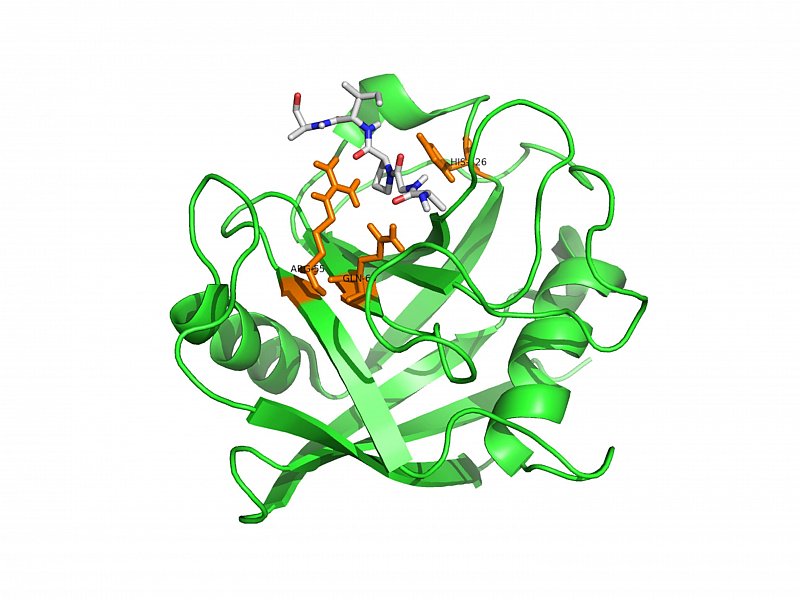
Hepatitis E virus (HEV) is a leading cause of virally induced hepatitis (liver inflammation). Worldwide the WHO estimate that there are more than 20 million HEV infections each year. Healthy individuals are typically able to overcome infection however advanced disease such as cirrhosis and liver failure are possible in some cases. In particular, there are high risk populations such as immunocompromised individuals and pregnant women for which mortality can reach upwards of 25%. Like other viruses HEV needs to hijack host cell proteins in order to help promote replication or block the action of host proteins that can interfere with viral replication. For HEV we currently do not know all of the proteins involved in this delicate balance.
In this regard human proteins called cyclophilins are known to be used by other liver specific viruses, such as hepatitis C virus (HCV), in order to complete their replication cycles. However, the studies into these proteins for HEV have been limited with contradictory findings.
Recent work from researchers at the University of Leeds led by Dr. Morgan Herod asked the question if cyclophilins played any role in either promoting or suppressing HEV replication. Interestingly they found that HEV does not use the cyclophilins in the same way as HCV and changes in replication appeared to be dependent on the strain of HEV used, with the requirement for cyclophilins differing between different strains of HEV. In particular, a strain that infects both humans and animals appeared to have some requirement for the cyclophilins to replicate. Using the immunosuppressive drug (cyclosporin A) that inhibits cyclophilins did not prevent HEV replication, again confirming the lack of a requirement for cyclophilins. This study indicates surprising differences between liver specific viruses and the importance of studying different viral strains. Further work is needed to identify the host proteins that are essential for HEV replication, which could lead to the development of new treatments in order to combat this emerging disease.
This study was published in Journal of General Virology 2023 Nov;104(11). doi: 10.1099/jgv.0.00191. Read the full article at
https://www.microbiologyresearch.org/content/journal/jgv/10.1099/jgv.0.001919