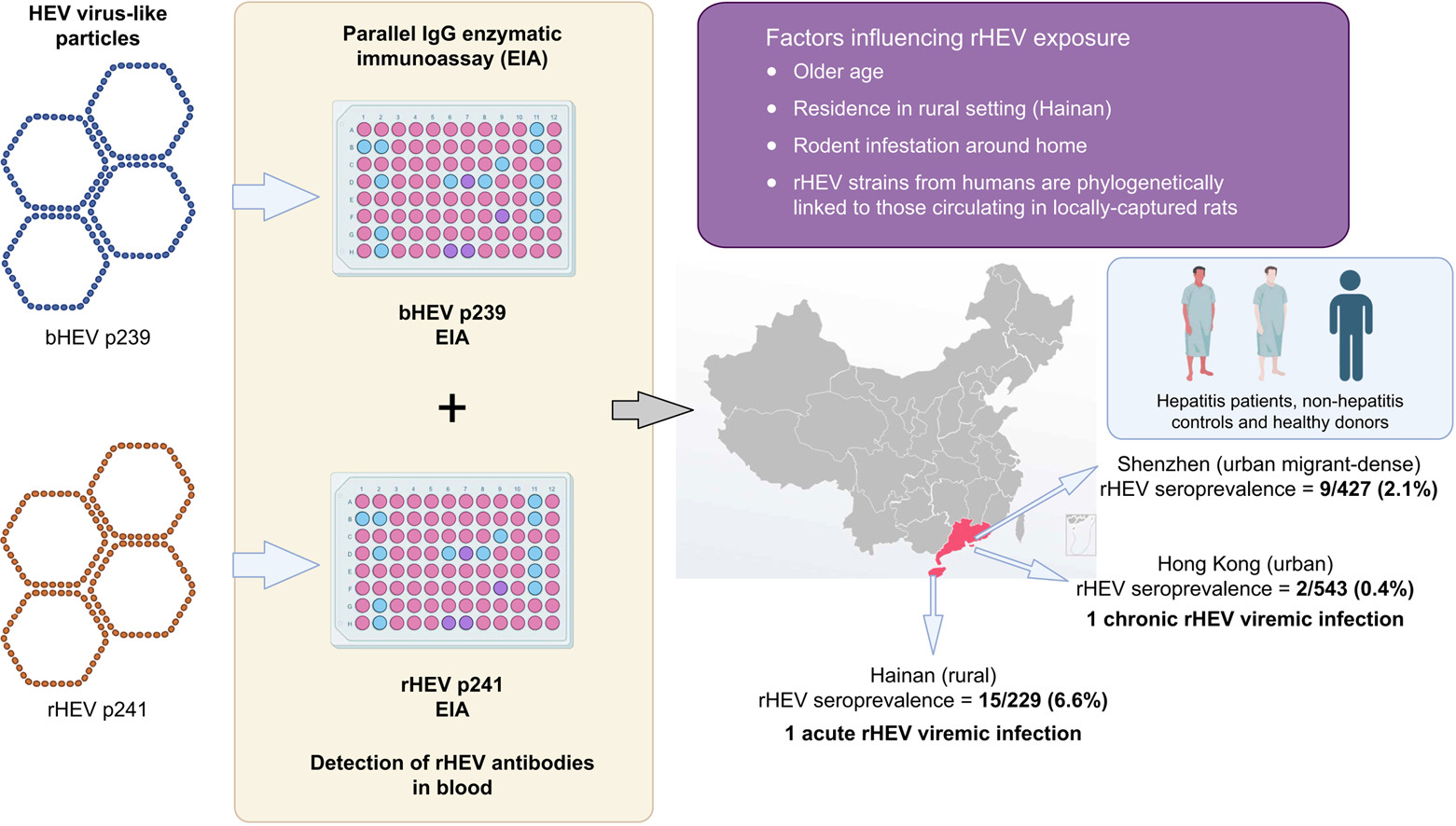
Rocahepevirus ratti genotype 1 (rHEV) is an emerging zoonotic hepatitis E virus variant. A recent study, let by Dr. Siddharth Sridhar, shed light on the prevalence of rHEV in rat populations and humans in a multi-center study in China conducted across both urban and rural settings. This research highlights the potential for zoonotic transmission of rHEV and also describes the first identified rHEV human infection in mainland China.
The study investigated the presence of rHEV through molecular and serological tests in patients with or without hepatitis in Hainan, Shenzhen, and Hong Kong. They found that the seroprevalence of rHEV (measured using a specific well-validated enzymatic immunoassay) was 6.6% in a rural Hainan population compared to 2.1% in Shenzhen and 0.4% in Hong Kong. Risk factors for rHEV seropositivity include older age, residence in rural settings, and rodent infestation around the home. Viremic rHEV infection was identified in two individuals with underlying liver disease (due to HBV) and immunosuppression (solid organ transplant). Both rHEV patients identified in this study developed hepatitis, which was chronic in the transplant recipient. In an ecological study of rHEV in Hainan rodents, the team found that 3.7% of all rats carried rHEV. Human rHEV cases were phylogenetically linked to circulating rHEV strains in rodents in Hainan and Hong Kong.
Humans are intermittently exposed to rHEV, especially in rural settings with rodent exposure. Overt hepatitis occurs in individuals with liver disease or immunosuppression. Spillover strains are related to epizootics in rodents offering opportunities for targeted disinfestation.
Read the full article: JHEP Rep. 2025 Mar 4;7(5):101370. DOI: 10.1016/j.jhepr.2025.101370